Your browser does not support or is disabling JavaScript.

stamp
MENU
 

EMBO|FEBS Lecture Course

Mitochondria in life, death and disease

13 – 17 September 2027 | Landshut, Germany

EMBO LogoFEBS logo
  • Registration Deadline
  • 04 June 2027
  • Abstract Submission Deadline
  • 04 June 2027
  • Chosen Participants Will Be Notified By
  • 16 June 2027
  • Payment Deadline
  • 30 June 2027

Apply now!

Use #EMBOMitochondria

Download calendar invitation

poster

Download
poster
▼

About the EMBO-FEBS Lecture Course

Mitochondria are far more than the powerhouses of the cell. They are dynamic, interconnected organelles at the heart of cellular metabolism, signaling, stress responses, and cell fate. Through constant communication with the nucleus and other organelles, mitochondria help cells adapt to changing physiological demands.

Our understanding of mitochondrial biology is currently being transformed by a new generation of experimental approaches. Breakthroughs in cryo-electron microscopy and tomography, super-resolution imaging, proteomics, and functional genomics are revealing mitochondrial organization and function at unprecedented spatial and temporal resolution—from the architecture of respiratory complexes and cristae membranes to the organization of mitochondrial gene expression and mitochondrial DNA.

This Joint FEBS/EMBO Lecture Course brings together leading researchers and early-career scientists to explore mitochondrial biology from molecular structure to organismal physiology in the course of the following sessions:

  1. Mitochondrial Biogenesis
  2. Mitochondrial Gene Expression
  3. Structural Biology in Mitochondria
  4. Mitochondria and Metabolism
  5. Mitochondrial Dynamics and Quality Control
  6. Mitochondrial Communication

A particular focus of this edition will be the rapidly emerging structural biology of mitochondrial biogenesis. A dedicated session will showcase how cryo-EM, cryo-ET, and super-resolution microscopy are changing our understanding of mitochondrial biology and function.

True to the tradition of this course, mitochondrial biology will be explored across an exceptionally broad range of experimental systems—including mammals, yeast, Drosophila, plants, myxozoas, and trypanosomes. By bringing together structural, molecular, cellular, physiological, and evolutionary perspectives, the workshop aims to reveal both the fundamental principles shared across mitochondria and the remarkable diversity of their adaptations.

Above all, the course provides an interactive environment for scientific exchange, discussion, and networking across career stages—connecting emerging researchers with mitochondrial experts by engaging in poster sessions, flash talks, participant-driven round tables and Meet the PI-Speed Dating events.

Image credits: Enrico Santini


About EMBO Courses and Workshops

EMBO Courses and Workshops are selected for their excellent scientific quality and timelines, provision of good networking activities for all participants and speaker gender diversity (at least 40% of speakers must be from the underrepresented gender).

Organisers are encouraged to implement measures to make the meeting environmentally more sustainable.

About FEBS and the FEBS Advanced Courses programme

As a grass-roots organization FEBS provides a voice to a large part of the academic research and teaching community in Europe and beyond. The FEBS Advanced Courses programme provides grants to expert scientists to organize courses that bring together researchers working in a similar research area, for training, updates, and networking. FEBS collaborates with EMBO, and other organizations, to co-fund some of these courses. You can learn more about FEBS here.


Programme


Registration

  • Registration Deadline
  • 04 June 2027
  • Abstract Submission Deadline
  • 04 June 2027
  • Chosen Participants Will Be Notified By
  • 16 June 2027
  • Payment Deadline
  • 30 June 2027


  • STUDENTS/POSTDOCS (double room) EUR 850
  • STUDENTS/POSTDOCS (single room) EUR 950
  • ACADEMIC EUR 1050
  • INDUSTRY EUR 1200

Registration includes:

  • 4 nights of accommodation with full board, including: breakfast, lunch, and dinner
  • Coffee breaks and refreshments throughout the course
  • Full access to all sessions and activities of the Joint FEBS/EMBO Lecture Course

Payment

Payments will be made via bank transfer. Details will be available upon acceptance to the course.

Cancellation policy

Full registration fees excluding bank transaction fees will be refunded up to: 14 July 2027

Selection criteria

A key aim of the course is to foster an interactive and engaging atmosphere that encourages exchange between participants at all career stages. To support this, participation will be limited to 100 students and postdoctoral researchers, who form the main target group of the course, together with approximately 20 invited speakers and 20 senior scientists representing diverse areas of mitochondrial biology.

As the course traditionally attracts a large number of applications, participants will be selected by the organizing committee. Selection will aim to bring together a diverse group of early-career researchers representing the breadth of contemporary mitochondrial biology, including different research topics, experimental approaches, and model systems, with particular attention to emerging areas of the field.

To enable participation from as many research groups as possible, the number of participants from an individual group may be limited to two. We will also strive for balanced gender representation among participants, complementing the gender-balanced invited speaker program.

By bringing together early-career researchers, established investigators, and invited experts in an intimate setting, the course is designed to stimulate discussion, encourage new connections, and create opportunities for scientific exchange throughout the meeting.

Abstract guidelines

Submitted abstracts should be no longer than 300 words (including title).

Poster specifications

Each participant will be provided with a board measuring 180 cm x 96 cm (portrait format) on which to mount the poster. For easy identification, the poster should have a title and author(s), identical to the one on the official program. The poster board will be double-sided, with one presentation on each side. Your assigned number will be in the upper left corner of the poster board. The boards will be arranged in numerical order. Poster sessions will have a designated time during which poster presenters are asked to be available at their poster to discuss their research with meeting attendees.

FEBS Registration Grants

A limited number of FEBS Registration Grants are available to support the participation of early-career scientists in this course. These funds will cover, partly or fully, the registration fee (up to a maximum of 800 EUR per person).

The selection of applicants to receive FEBS Registrations Grants will be carried out by the course organizers on the basis of CV, abstract, and motivation letter, and approved by the FEBS Treasury Office according to the FEBS eligibility criteria.

Child care grants

EMBO Courses and Workshops offers grants to offset additional childcare costs incurred by participants or speakers when participating at any EMBO Courses and Workshop funded meeting. Eligible costs include fees for a caregiver or child-care facility, travel costs for a caregiver, or travel costs for taking the child to the meeting etc. Please indicate on the registration form whether you would like to be considered for the grant. Please also describe how you intend to use the childcare grant and specify the sum that you will need.

Accessibility grants

EMBO offers accessibility grants to support participants at EMBO Courses & Workshops with any access needs. These grants cover up to 500 Euros for any additional costs e.g. to adapt the conference environment, or to be accompanied by someone to assist them where necessary.

Participants with access needs may apply for a grant via the registration system of the related EMBO event, or by emailing the organizers of the related EMBO event directly.


Code of conduct

Anti-harassment and non-discrimination policy

At EMBO, we believe that harassment and discriminatory behaviour are unacceptable in any setting.

Media and communications policy

Recording or communication of the presented data needs to be agreed upon by all concerned.

EMBO's code of conduct is applicable for all participants of this EMBO meeting and can be found here.


Contact

Nina Bonekamp and Torsten Ochsenreiter

Email: mito.febs.embo@protonmail.com


Venue

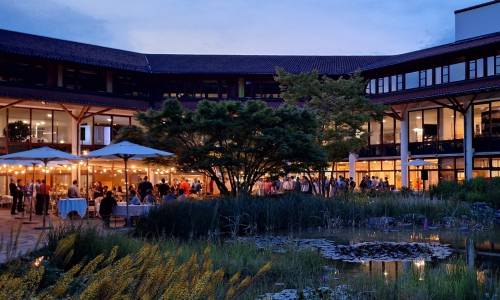
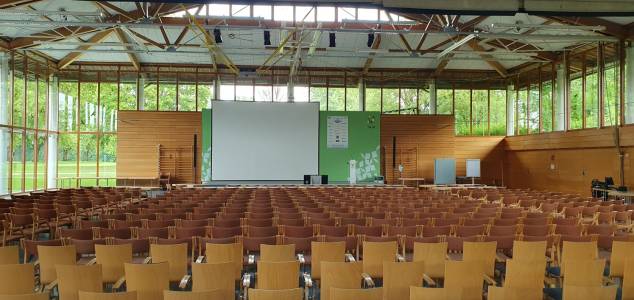
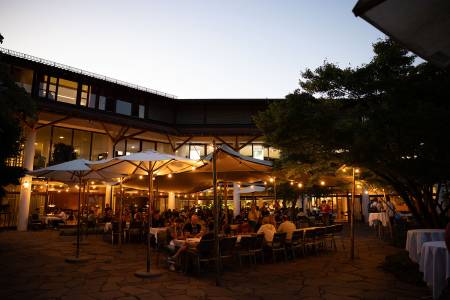
ta.la tagungszentrum Landshut

Bürgermeister-Zeiler-Straße 1
84036 Landshut, Germany

Accommodation

Accommodation is provided in both single and double rooms. Single rooms will primarily be reserved for invited speakers and principal investigators, but a limited number will also be available for early-career researchers.
For early-career researchers, the participation fee is €850 for accommodation in a double room and €950 for accommodation in a single room. We will do our best to accommodate individual preferences; however, room allocation will be managed by the organizers and will depend on availability.

Transport

Landshut is easily reached by local train from Munich (approx. 45 minutes). Munich central station is well connected to the European night train network. The train journey from Munich airport to Landshut takes about 35 minutes. Local buses (Bus X3 or 3 (during the day); Bus 14, 103 (during the evening/night)) run every 30 minutes to the conference venue.

About the Area

Located in the heart of Bavaria, Landshut is a picturesque historic city on the banks of the River Isar, within easy reach of Munich and the foothills of the Alps. Founded in 1204, the city combines more than 800 years of history with a lively and welcoming atmosphere.
Landshut is particularly known for its beautifully preserved Gothic old town, with colorful façades, charming cafés, and impressive historic landmarks. Rising above the city, Trausnitz Castle offers wonderful views across Landshut and the surrounding countryside, while the striking Church of St. Martin, with its soaring brick tower, is one of the city’s most recognizable landmarks.
With its compact historic center, riverside setting, and distinctly Bavarian character, Landshut provides an attractive and relaxed setting for the course—and plenty to discover beyond the scientific program.

EMBO Journal FEBS Logo