Your browser does not support or is disabling JavaScript.

stamp
MENU
 

EMBO Practical Course

Microfluidic chip fabrication and organoid systems

05 – 09 January 2027 | Thiruvananthapuram, India

  • Registration Deadline
  • 2 November 2026
  • Abstract Submission Deadline
  • 5 October 2026
  • Chosen Participants Will Be Notified By
  • 15 October 2026
  • Payment Deadline
  • 2 November 2026

Apply now!

Use #EMBOmicrochip

Download calendar invitation

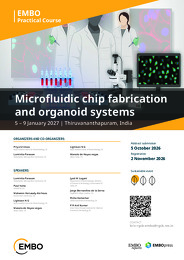
poster

Download
poster
▼

About the Practical Course

Organoid and organ-on-chip technologies are transforming the field by providing physiologically relevant, human-based alternatives to animal experimentation. Central to these advances are microfluidic platforms, which enable precise control of cellular microenvironments, and tissue–tissue interactions. The goal of this EMBO Practical Course is to provide young scientists with an overview of modern microfluidics and advanced culture methods, bridging the gap between chip engineering and biological applications. Primarily aimed at PhD students, postdocs, and early-career investigators, this intensive 5-day practical course balances theoretical insights with extensive practical application, featuring plenary lectures including multi-organ drug screening, sustainable chip fabrication, and point-of-care diagnostics.

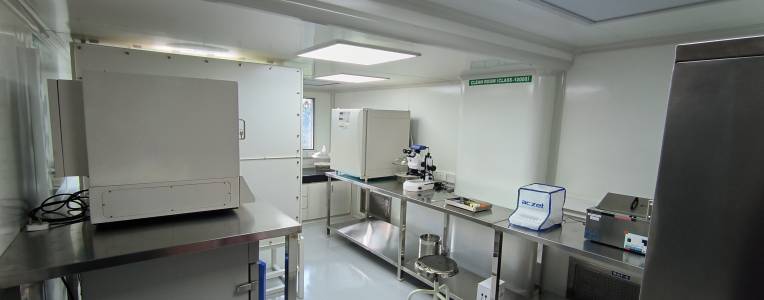
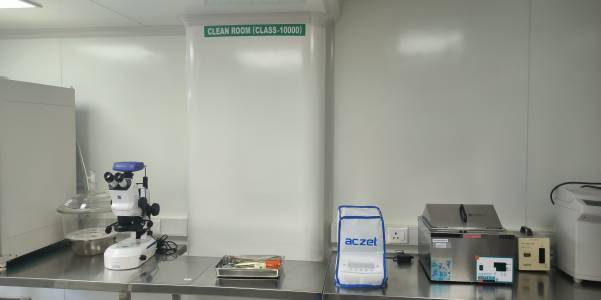
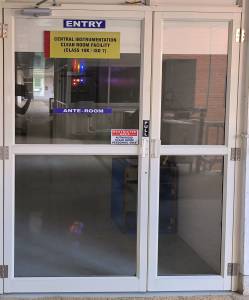
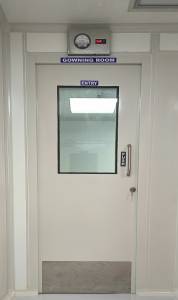
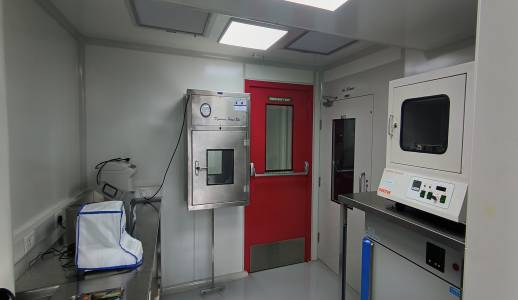
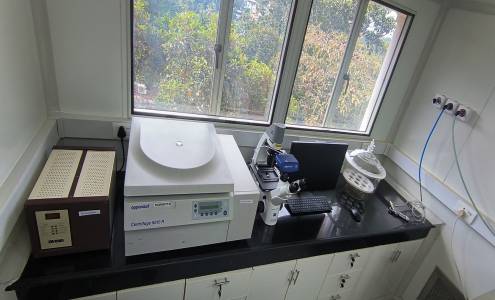
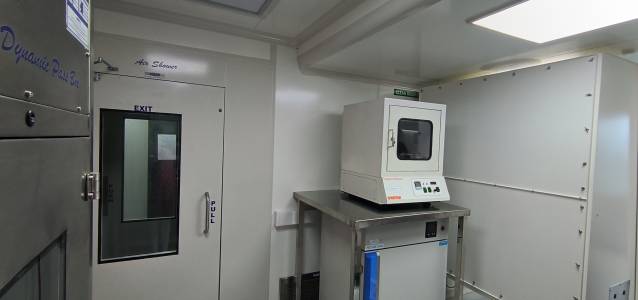
Central to this EMBO Practical Course is an immersive, participant-level, practical hands-on training workflow conducted inside a fully operational ISO 7 clean room facility, rather than simple observational demonstrations. Participants will gain end-to-end technical expertise by actively engaging in PDMS fabrication, multi-tool microfluidic rapid-prototyping, assembly, and plasma bonding. On the biological front, the training emphasizes immediate application, with participants mastering cell seeding and culturing in PDMS devices, tracking cell motility via immunofluorescence, and executing organoid culture workflows, demonstrations, and staining. By executing these protocols firsthand, participants will acquire highly transferable, specialized skills ready for immediate implementation in their home laboratories.

Images are generated via Biorender, Canva and inkscape


About EMBO Courses and Workshops

EMBO Courses and Workshops are selected for their excellent scientific quality and timelines, provision of good networking activities for all participants and speaker gender diversity (at least 40% of speakers must be from the underrepresented gender).

Organisers are encouraged to implement measures to make the meeting environmentally more sustainable.


Programme


Registration

  • Registration Deadline
  • 2 November 2026
  • Abstract Submission Deadline
  • 5 October 2026
  • Chosen Participants Will Be Notified By
  • 15 October 2026
  • Payment Deadline
  • 2 November 2026


  • STUDENTS/POSTDOCS EUR 186
  • ACADEMIC EUR 232

Registration includes:

  • course materials
  • accommodation
  • meals
  • course dinner
  • excursion
  • local transportation (during the Practical Course, from 6:00 p.m. on January 4 to 11:00 a.m. on January 10, 2027.)
  • lunch and coffee breaks
  • refreshments at poster sessions

Registration information

All candidates must submit a curriculum vitae (CV) and a motivation letter of no more than 200 words outlining their future plans for utilizing microfluidics in their current research, as well as explaining the relevance of their current research to the fields of microfluidics or advanced tissue engineering.

Guidelines for the Letter of Motivation

A compelling Letter of Motivation is a key component of your application and will be weighted by the selection committee. Your letter must be written in English, adhere to approximately 200 words, and directly address the following two focal points:

  1. Research Alignment & Critical Need: Describe your current research project. Clearly articulate why integrating microfluidics, advanced tissue models, or organoid systems is absolutely critical to overcoming your current experimental bottlenecks.
  2. Immediate Technical Implementation: Identify the specific hands-on techniques from this course (e.g., PDMS fabrication, multi-tool rapid-prototyping, microfluidic cell seeding, or liver organoid staining) that you intend to implement in your experiments immediately upon completion of the program.

Note: The selection committee is looking for candidates who show a genuine need and key interest for microfluidics in their work.

Payment

Participants will be required to pay online via bank transfer/UPI/credit, or debit card. Payment details and instructions will be sent to selected participants by email.

Cancellation policy

Participants who wish to cancel their attendance must notify the organizers in writing via email. Cancellations received on or before the registration deadline will be eligible for a refund. Cancellations received after the registration deadline may not be eligible for a refund. Substitutions of participants may be permitted upon prior approval by the organizers. The organizers reserve the right to modify the cancellation policy or cancel the event, if necessary, in which case registered participants will be informed promptly.

Selection criteria

PhD students, Postdoctoral fellows, and young faculty with prior expertise in cell culture. Participants who plan to use microfluidics in their current research will be given preference.

Abstract guidelines

Abstracts must be submitted in English and should clearly outline the current study details as indicated below.

  • Format: Single paragraph with a maximum of 250 words (excluding title, authors, and affiliations). The abstract title is mandatory and may be up to 20 words. Include 3-5 keywords relevant to the work.
  • Structure: Must include a brief Introduction/Background, Aim/ Objective, the specific Methods used, key Results, and a concluding statement on the Impact of the work.
  • Typography: Use standard fonts (e.g. Times New Roman, 12pt) and avoid embedding figures, tables, or complex mathematical formulas.
  • Author Details: Clearly list the presenting author (underlined), co-authors, and full institutional affiliations.

Submitted abstracts will be peer-reviewed by the organizing committee. Selected abstracts will be allocated for either a Poster Presentation or a Short Flash Talk during the course.

Poster specifications

All accepted abstracts will be presented during the dedicated evening poster and networking sessions. Please ensure your poster adheres to the following guidelines:

  • Dimensions: 3ft width and 4ft height
  • Orientation: Portrait (Vertical) only. Landscape posters cannot be accommodated due to board limitations
  • Header: The top of the poster must prominently display the Title, Author names, and Affiliations matching your submitted abstract. The name of the presenter should be underlined
  • Legibility: Font and font size to be used in the poster are up to the discretion of the presenter. Text should be easily readable from a distance of 1–2 meters. (Recommended: Headings 36–44 pt, Body text 24–30 pt). Focus on clear schematics, chip designs, and data plots over dense text. Legends and titles should be provided for figures, tables, photographs, etc., in order to allow their easy identification
  • Setup & Materials: Fixings (pins/tape) will be provided at the venue. Your specific poster board number will be assigned at the registration desk

Networking Tip: If possible, we encourage adding a small QR code linking to your lab website, preprints, or digital contact card.

Travel grants and registration fee waivers

Travel grants and registration fee waivers are available for participants.

Selection of awardees is handled directly by the organizers. EMBO travel grants and registration fee waivers are allocated on the basis of the quality of the submitted abstract.

Applicants do not need to apply separately for these but should indicate on the registration form if they wish to be considered.

Additional travel grants are available for EMBC Associate Member States Chile, India, Singapore and Taiwan.

Child care grants

EMBO Courses and Workshops offers grants to offset additional childcare costs incurred by participants or speakers when participating at any EMBO Courses and Workshop funded meeting. Eligible costs include fees for a caregiver or child-care facility, travel costs for a caregiver, or travel costs for taking the child to the meeting etc. Please indicate on the registration form whether you would like to be considered for the grant. Please also describe how you intend to use the childcare grant and specify the sum that you will need.

Accessibility grants

EMBO offers accessibility grants to support participants at EMBO Courses & Workshops with any access needs. These grants cover up to 500 Euros for any additional costs e.g. to adapt the conference environment, or to be accompanied by someone to assist them where necessary.

Participants with access needs may apply for a grant via the registration system of the related EMBO event, or by emailing the organizers of the related EMBO event directly.


Code of conduct

Anti-harassment and non-discrimination policy

At EMBO, we believe that harassment and discriminatory behaviour are unacceptable in any setting.

Media and communications policy

Recording or communication of the presented data needs to be agreed upon by all concerned.

EMBO's code of conduct is applicable for all participants of this EMBO meeting and can be found here.


Contact

Aiswarya M. A.

Email: bric-rgcb-embo@rgcb.res.in

Phone: 9567394187 (WhatsApp Communication)


Venue

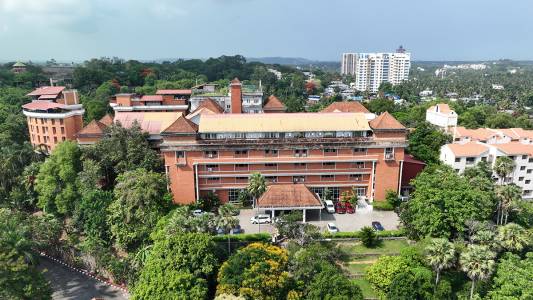
BRIC-Rajiv Gandhi Centre for Biotechnology, Poojappura, Thiruvananthapuram -695014, Kerala, India.

Accommodation

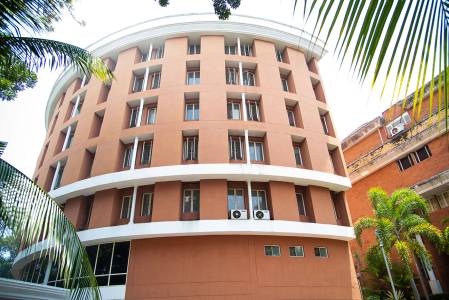
Accommodations for participants will be arranged on a twin-sharing (double occupancy) basis in the well-maintained rooms of the BRIC-RGCB guest house or hostel at Aakulam campus during the event days. The participants who wish to share a room with his/her colleague may submit a request to the organizing committee in advance, so arrangements can be made prior to your arrival.

Transport

Participants attending the event at the BRIC-Rajiv Gandhi Centre for Biotechnology, Thiruvananthapuram have multiple transportation options.

Directions to Accommodations: BRIC-RGCB, Aakulam Campus, Thiruvananthapuram​

(For participants arriving directly at the place of stay/accommodation)

Arriving by Plane​

The Thiruvananthapuram International Airport connects the city to major domestic and international hubs, making it the primary entry point for long-distance participants. The approximate distance is 9 to 10 km (depending on whether arriving at Terminal 1 or Terminal 2) and takes ~25 to 35 minutes by road. Commute Options include pre-paid taxis and app-based cabs (like Uber or local taxi services) are readily available outside the terminals.

Arriving by Train​

For those traveling by rail, the Trivandrum Central Railway Station is the main railway terminus serving the region. The approximate distance is 11 km. and takes about ~20 to 30 minutes. The Commute Options include auto-rickshaws; the most efficient option is available at the station's 24/7 in the designated auto stand. Alternatively, participants can use local app-based ride-hailing services like Uber/ Rapido and also bus services are available since the Thampanoor bus terminal is nearby the railway station.

Arriving by Intercity Bus​

Participants traveling from neighboring districts or states via long-distance buses generally arrive at the Thampanoor KSRTC Bus Station (located directly opposite the central railway station). The approximate distance is 11 km and it takes about ~20 to 30 minutes. Similar to railway arrivals, taking an auto-rickshaw from the Thampanoor stand is highly convenient.

Directions to Venue: BRIC-RGCB Jagathy Campus, Thiruvananthapuram​

(For participants arriving directly at the Venue)

Arriving by Plane​

The Thiruvananthapuram International Airport connects the city to major domestic and international hubs, making it the primary entry point for long-distance participants. The approximate distance is 9 to 10 km (depending on whether arriving at Terminal 1 or Terminal 2) and takes ~25 to 35 minutes by road. Commute Options include pre-paid taxis and app-based cabs (like Uber or local taxi services) are readily available outside the terminals.

Arriving by Train​

For those traveling by rail, the Trivandrum Central Railway Station is the main railway terminus serving the region. The approximate distance is 11 km and takes about ~20 to 30 minutes. The Commute Options include auto-rickshaws; the most efficient option is available at the station's 24/7 in the designated auto stand. Alternatively, participants can use local app-based ride-hailing services like Uber/ Rapido and also bus services are available since the Thampanoor bus terminal is nearby the railway station.

Arriving by Intercity Bus​

Participants traveling from neighbouring districts or states via long-distance buses generally arrive at the Thampanoor KSRTC Bus Station (located directly opposite the central railway station). The approximate distance is 11 km and it takes about ~20 to 30 minutes. Similar to railway arrivals, taking an auto-rickshaw from the Thampanoor stand is highly convenient.

From the place of stay to the venue and vice versa, shuttle buses will be provided for smooth transportation of participants.

About the Area

The venue is situated in Thiruvananthapuram, Kerala, with easy access to public transportation, hotels, restaurants, pharmacies, and banking facilities. The institute campus provides a safe and convenient environment for participants. Several cultural and tourist attractions are located within a short distance of the venue.

Sustainability at the meeting

The EMBO Courses & Workshops Programme assesses meetings based on the proposal and implementation of sustainability measures. Meetings can earn points across a range of measures, with each measure assigned a point value from one to five. These points classify the meeting into one of three sustainability levels, reflecting the organizers' commitment to enhancing the sustainability of their event. More information on the EMBO Courses & Workshops Sustainability Badge can be found here.

  • Catering will include vegetarian days with locally sourced ingredients. Stainless steel cutlery and glassware will be used. Plastic bottles and cans are excluded
  • Abstract books and programs will be shared in electronic form only
  • Reusable laboratory equipment and demonstration materials will be used whenever possible to reduce laboratory waste
EMBO Reports